イライラさせるCORSを征服しよう
CORS???なにこれ
概要
Web開発をしていると、以下のような'CORS policy'エラーに遭遇する場合が多い。

今回のポストではCORSを理解することが目標である。
Web OriginとSame Origin Policy
Web OriginとSame Origin Policyは、国際インターネット標準化機構(IETF)が管理するRFC-6454 (2011.12)文書で登場する表現である。
The Web Origin Concept
This document defines the concept of an "origin", which is often used as the scope of authority or privilege by user agents. Typically, user agents isolate content retrieved from different origins to prevent malicious web site operators from interfering with the operation of benign web sites. In addition to outlining the principles that underlie the concept of origin, this document details how to determine the origin of a URI and how to serialize an origin into a string. It also defines an HTTP header field, named "Origin", that indicates which origins are associated with an HTTP request.
... rfc6454から
Principles of the Same-Origin Policy
Many user agents undertake actions on behalf of remote parties. For example, HTTP user agents follow redirects, which are instructions from remote servers, and HTML user agents expose rich Document Object Model (DOM) interfaces to scripts retrieved from remote servers. Without any security model, user agents might undertake actions detrimental to the user or to other parties. Over time, many web- related technologies have converged towards a common security model, known colloquially as the "same-origin policy". Although this security model evolved largely organically, the same-origin policy can be understood in terms of a handful of key concepts. This section presents those concepts and provides advice about how to use these concepts securely.
... rfc6454から
Same-Origin Policyはセキュリティのための政策で、User Agent(=ブラウザ)は同じWeb Originに対してのみ通信しなければならないという政策である。 例を挙げると、ブラウザはhttps://blog.wichan.devからhttps://google.comへのXHRリクエストをできないようにブロックする責任がある。
Cross Origin Resource Sharing
SOPはセキュリティ上重要だったが、他ドメインのリソースを呼び出すことが有用な場合が頻繁にあるため、CORSと呼ばれる例外政策が追加された。 CORSは他ドメイン(Cross-Origin)間でリソースを共有するために作られた政策である。
CORS通信の3つのシナリオ
Simple Requests
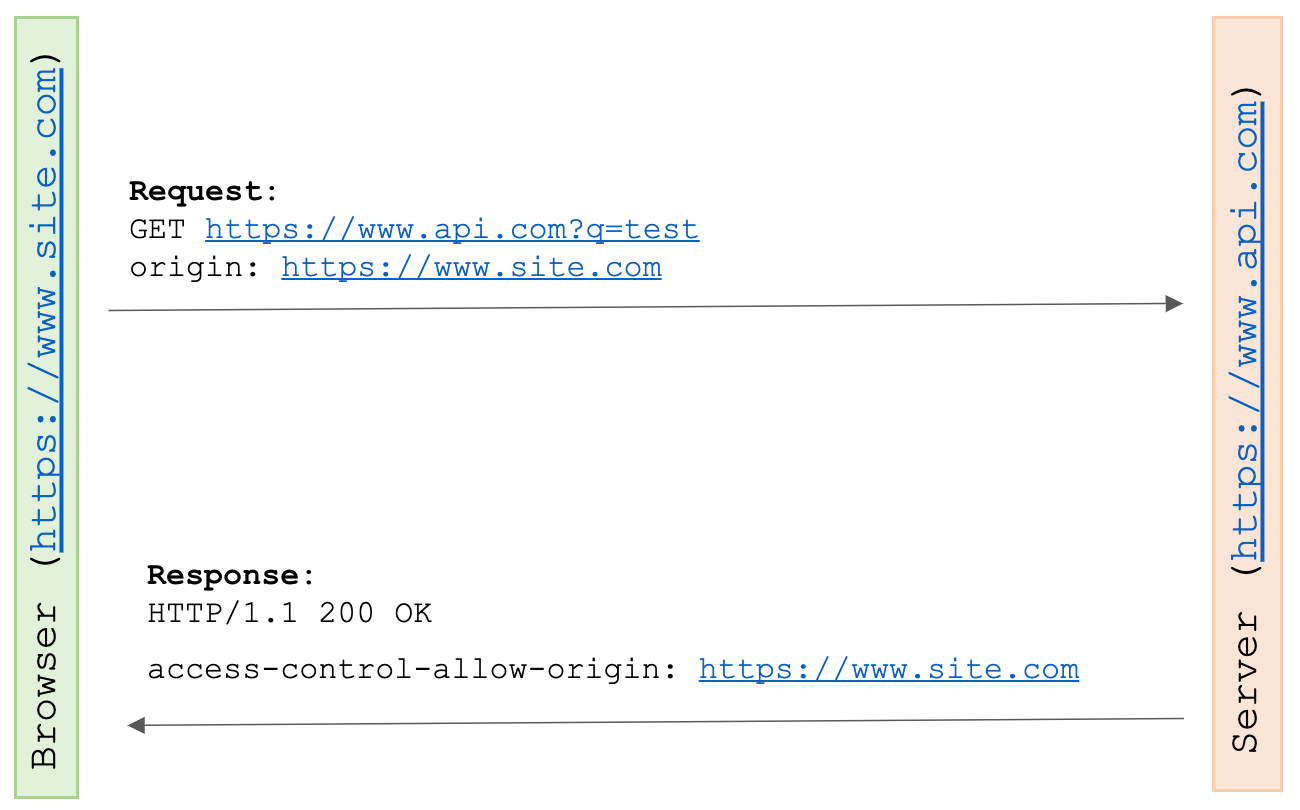 以下の条件をすべて満たすと、ブラウザはSimple-Requestsとして動作する。
- GET、HEAD、POSTリクエストの場合
- リクエストにAccept、Accept-Language、Content-Language、Content-Typeなどのブラウザヘッダーのみを含む場合
- リクエストにCORS Safelistedヘッダーのみを含む場合
- ... その他など(詳細は元の出典にある)
ブラウザはHTTPリクエストにOriginヘッダーを含めてリクエストし、サーバーは応答access-control-allow-originヘッダーにSOP例外ドメインを含む。 ブラウザはRequestのOriginとaccess-control-allow-originを比較し、同じであれば正常処理し、異なれば破棄する。
Non-Simple Requests
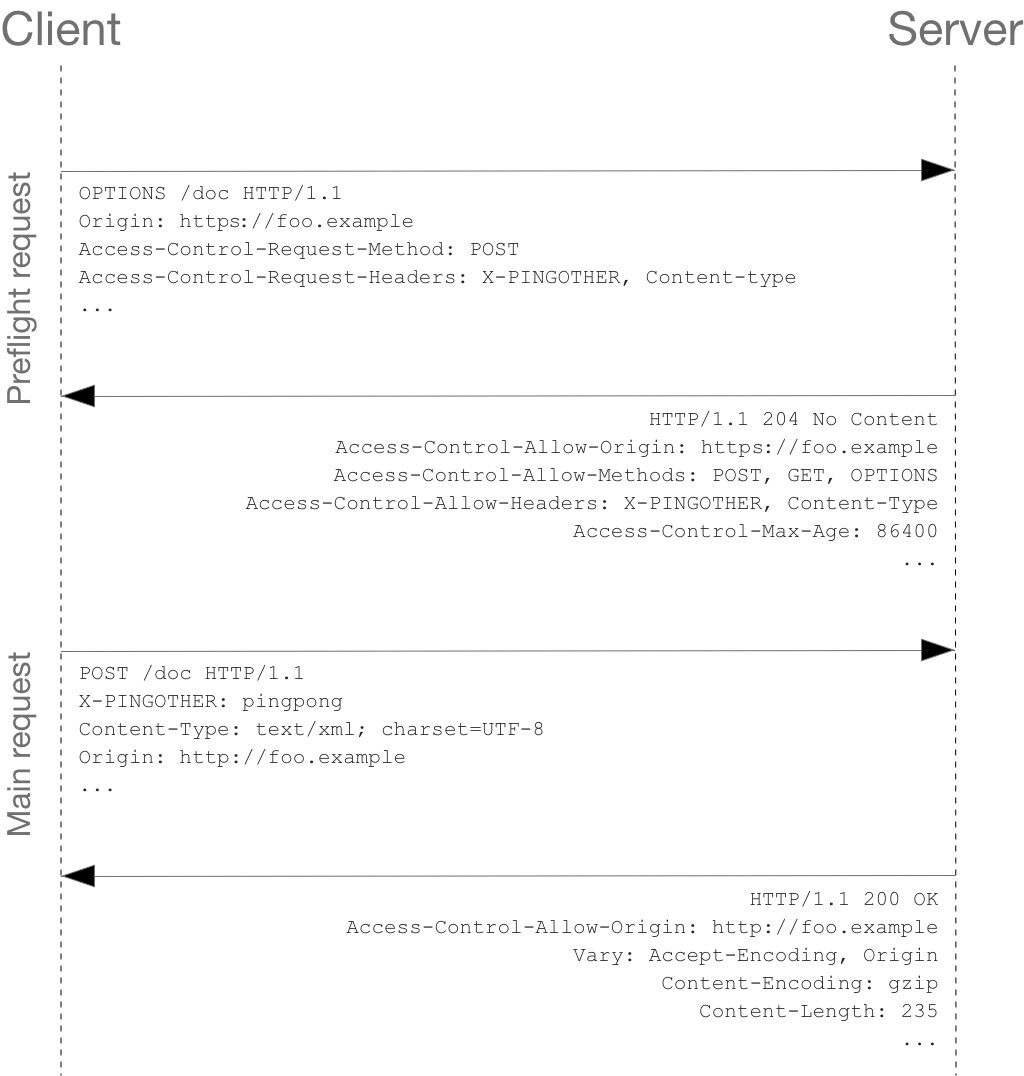 Simple-Requestsに含まれないリクエストであれば、Pre-flightリクエストと呼ばれる過程が追加される。
ブラウザは実際のRequest以前にaccess-control-allow-originを受け取るためのOPTIONリクエストを実行する。
これがPre-flightリクエストである。pre-flightが正常であれば、その後実際のrequestを実行することになる。
Simple-Requestsに含まれないリクエストであれば、Pre-flightリクエストと呼ばれる過程が追加される。
ブラウザは実際のRequest以前にaccess-control-allow-originを受け取るためのOPTIONリクエストを実行する。
これがPre-flightリクエストである。pre-flightが正常であれば、その後実際のrequestを実行することになる。
Credentialed Requests
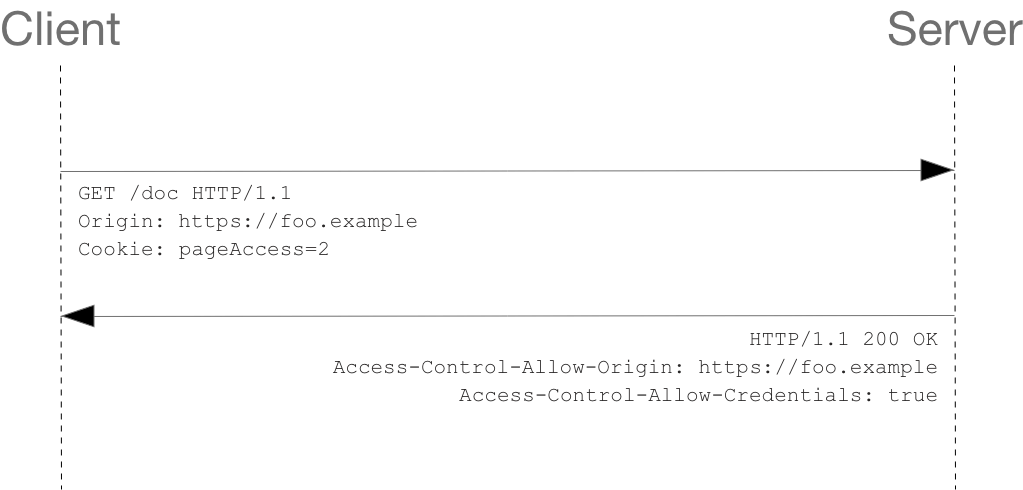 基本的にCookieやAuthorizationなどの認証情報をCORSするには、サーバーがaccess-control-allow-originのみ応答してはならない。
ブラウザはRequest時にcredentialsオプションを使用しなければならず、サーバーはaccess-control-allow-credentials:trueヘッダーと、ワイルドカードではないドメインが明示されたaccess-control-allow-originヘッダーを応答しなければならない。
基本的にCookieやAuthorizationなどの認証情報をCORSするには、サーバーがaccess-control-allow-originのみ応答してはならない。
ブラウザはRequest時にcredentialsオプションを使用しなければならず、サーバーはaccess-control-allow-credentials:trueヘッダーと、ワイルドカードではないドメインが明示されたaccess-control-allow-originヘッダーを応答しなければならない。
結論
CORSはブラウザとサーバー間でSOP例外として通信する必要がある時に必要な政策である。 結局SOPはブラウザ-サーバー間の政策であるため、サーバー-サーバー通信ではCORSを使用せよというエラーメッセージは発生しない。
自社サービスであればフレームワークが提供するcors関連ライブラリを使用して処理でき、他サービスにXHR呼び出しする必要がある場合はProxyを構成する方法がある。