Implementing Priority Queue (Feat. Heap)
Why doesn't JavaScript have a priority queue STL?
What is a Priority Queue?
A Priority Queue is a data structure where data with higher priority comes out first. Even if an element just entered the queue, if it has the highest priority, it can come out first.
How to Implement It?
Let's assume that smaller numbers have higher priority. How can we implement this?
Intuitive Method
Intuitively, we can think of a method where we put it in and then iterate through all elements in the array.
class PQ {
    constructor() {
        this.queue = [];
    }

    push = (e) => this.queue.push(e);

    pop = () => {
        if (this.queue.length === 0) return;

        let min = Infinity;
        for (let elem of this.queue) {
            if (elem < min) min = elem;
        }
        return min;
    }
}
I implemented the requirements using an intuitive method.
At this time, it's obvious that the time complexity of the push function is O(1) and the time complexity of the pop function is O(N).
Method Using Heap Data Structure
A Heap is a complete binary tree where the parent node is always smaller than the child node.
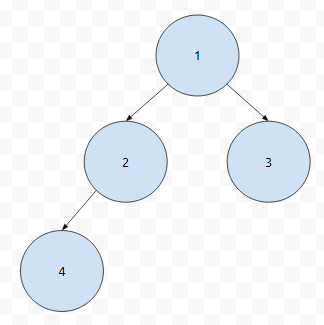
For reference, a complete binary tree is a tree data structure where nodes are filled from the top and left.
Complete Binary Tree
Perfect Binary Tree
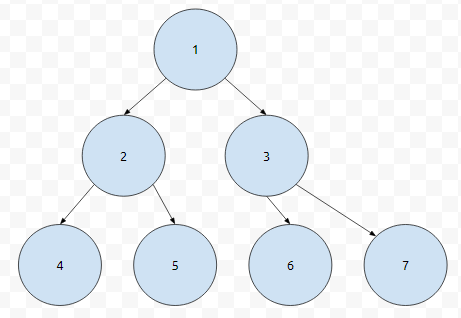
Complete binary tree and perfect binary tree are different; a perfect binary tree is completely filled with nodes.
Anyway, we can create a priority queue using the heap's characteristic that 'the parent node is always smaller than the child node'. When pushing to the queue, we always insert while maintaining the heap structure, and when popping from the queue, if we pop the root node of the heap, it becomes a priority queue.
Implementation
class PQ {
    constructor() {
        this.heap = [null];
    }

    _swap = (a, b) => [this.heap[a], this.heap[b]] = [this.heap[b], this.heap[a]];

    size = () => this.heap.length - 1;

    peek = () => this.heap[1] !== undefined ? this.heap[1] : null;

    push = (value) => {
        this.heap.push(value);
        let curIdx = this.heap.length - 1;
        let parIdx = (curIdx / 2) >> 0;

        while (curIdx > 1 && this.heap[curIdx] < this.heap[parIdx]) {
            this._swap(parIdx, curIdx)
            curIdx = parIdx;
            parIdx = (curIdx / 2) >> 0;
        }
    }

    pop = () => {
        const min = this.heap[1];
        if (this.heap.length <= 2) this.heap = [null];
        else this.heap[1] = this.heap.pop();

        let curIdx = 1;
        let leftIdx = curIdx * 2;
        let rightIdx = curIdx * 2 + 1;

        while (this.heap[leftIdx] < this.heap[curIdx] || this.heap[rightIdx] < this.heap[curIdx]) {
            const minIdx = this.heap[leftIdx] > this.heap[rightIdx] ? rightIdx : leftIdx;
            this._swap(minIdx, curIdx);
            curIdx = minIdx;
            leftIdx = curIdx * 2;
            rightIdx = curIdx * 2 + 1;
        }

        return min;
    }
}
At this time, we can see that the time complexity of the push function is O(logN) and the time complexity of the pop function is O(logN).
Conclusion
Basic JavaScript doesn't provide heap or STL's priority_queue, so we have to implement it ourselves. Not just this, but I've been implementing combination, permutation, queue... etc. directly.
When am I going to implement this during coding tests...